At the moment the war is between the Séléka and the Anti-Balaka. They are also known as the muslims and the christians, which makes people think it's a religious war, which is it not. It is correct that there are two different groups of people. The Séléka does consist mainly of Muslims and the Anti-Balaka of Christians, but their motivation is not based on religion at all.
They two groups are formed, because they were already made in the past. The muslims met other muslims in mosques and the christians met other christians in the church. All people lived happily next to each other, before the start of the Central African Republic Bush War. Secondly both the parties are fighting because of how they want the country to be governed and the revenge for earlier fights. No religious leader told them what to do 'in the name of god or allah', they decided to do it for their own. At last the religious leaders themselves even talk to each other about peace. They have not hate against each other and don't want to get involved in the war. They do what they can and work together as a team, what everyone should do to stop the war.

In a war like this solutions are hard to find, however one organisation managed to do that. The JUPEDEC is a non-governmental organisation and offers free medical help for everyone in the Central African Republic. They have both muslim and christian doctors who help each other to cure people that are wounded because of fights and to save lifes. It exists out of only volunteers, which is why they also need help from other countries or organisations. This organisation should be funded, because the locations where this is settled there is no war anymore between the parties, there is only help for everyone who needs it.
It is too superficial to name one event or person that started the unrest in the Central African Republic, because the civil war is an effect of years of social development. Since independence in 1958 and a few presidents later you can see a pattern. In most cases the cause of civil unrest is the president. Elections are not held properly and people such as Jean-Bedel Bokassa can call themselves "president for life." Mostly what happens after is that civil uprisings occur and foreign organisations try to intervene in the conflict. This escalates, the president is overthrown and a new one pops up. So you could say that the cause of the unrest is the way the president is chosen and maybe even more important, how he is treated. What you can see in all the recent presidents is that they come from a position where they had to fight for what they thought and when they came to presidency they had a taste of real power. What happened with president Michel Djotodia was that he parted with the Seleka where he was once part of, because he could not uphold an agreement with them. He was now a leading figure and could almost do anything he wanted, or so he thought. Histroy repeated itself and he was forced to resign as president.
The effect of this is that without interverance of global organisations such as the UN the country ends up in an infinite loop, so that is exactly what the UN did in collaboration with France. They send their troops to disarm both rebel groups, but that did not go quite as planned. The troops ended up more on the Anti-balaka side, only disarming rebels belonging to the Seleka. Right now both sides are holding a ceasefire and several talks are organised, but things may once again escalate into an armed conflict.
.png)
The Central African Republic (CAR) civil war is a result of the CAR Bush war, which was a war mainly between government forces and Union of Democratic Forces for Unity (UFDR) rebels, but many other small rebels groups were involved in the conflict as well.
The rebellion started after François Bozizé seized presidency in 2003 and the armed conflict started the following year. During the conlfict, rebel forces seized several cities in North-Eastern CAR and tens of thousands of civilians were displaced or had to flee. Thousands of houses were burned and hundreds of civilians were killed. On the 13th of april 2007 a peace agreement was signed between the UFDR and the government recognising the UFDR as a political party and allowing their forces into the army. Further negotiations led to local elections in 2009 and parliamentary elections in 2010 and presidential elections in 2011 .
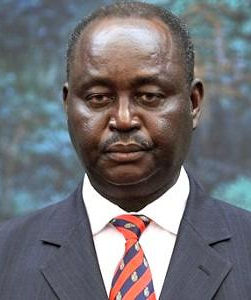 The leader: This is CAR's former president François Bozizé. He was born on the 14th of october 1946 in Mouila, Gabon (south-west of CAR). He came to presidency on the 15th of march 2003, when he led an uprising against president Patassé. His forces captured the capital, Bangui, when the president was out of country and Bozizé seized power. He then won the election rounds of 2005 and was re-elected in 2011, but in december 2012 uprisings broke out by rebel groups that despised Bozizé. They blamed him for not honoring the previously signed peace agreements of 2007 and 2011, therefor he was forced to flee the county on the 23rd of march 2013, after rebel groups attacked the capital and took control over the presidential palace.
The civilians: A 12 year old boy wakes up in the morning. He opens his eyes and tries not to move a lot, because he doesn't want to wake any of his other siblings sleeping next to him. He stands up and carefully places his feet between the bodies which have barely flesh left around their bones. When he reaches the doorway he looks around to see if anyone has woken. His stumach makes a roaring sound, but he knows there will be nothing to eat, so he tries to calm it down. He thinks by himself that maybe water would help and goes outside. But before he could even set one step out of the house he sees three bodies laying in front of the house. The blood of the three bodies are all over their clothes and on the ground. The boy turns the head of the first body and discovers what he already feared, it was his dad. He was doesn't have to look at the other bodies, because he already knows they're his oldest brother and uncle. The three of them had to tell something to the other camp. The boy screams and the whole camp comes and helps him with his family. The three of them are covered in a plastic sack and lowered in their grave.